Industrial components are frequently subjected to heat, friction, abrasion, corrosion and repeated mechanical stresses. Applying an appropriate coating can help to protect the base material and increase its service life. One solution to coat various surfaces with protective or functional coatings is thermal spray technology. Picking the right dust matters a lot here. What goes into it shapes how well the skin works, how long it holds up and if it even fits what your setup needs.
What Are Thermal Spray Powders?
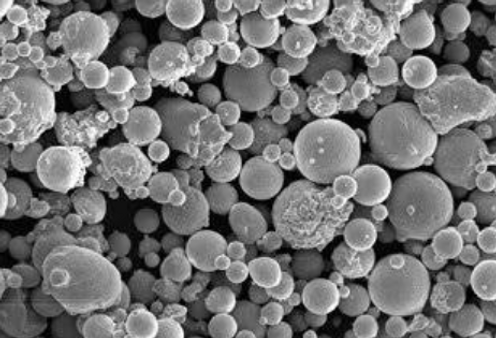
Spray powders are special stuff put into a system that coats a clean base. The process heats up and shoots tiny dust bits at a wall, so they smash flat and stick tight to form a shield.
Depending on the desired properties, various materials can be used. Depending on the application, a metal alloy, ceramics or other special compositions can be used.
The powder must be appropriate for the thermal spray process used since the characteristics of the powder may affect the quality of the coating.
How Do Thermal Spray Coatings Protect Components?
Thermal spray coating produces a thin film between the base component and the environment it is working in. This layer may have properties which the underlying material does not have.
For instance, if components are subjected to repeated friction, a coating can help to minimize surface wear. Other coatings may be used for high-temperature protection, oxidation, erosion or corrosive materials.
This can be beneficial in situations where replacement of the entire component material is not feasible or not cost-effective. Rather than this, however, the surface can be endowed with special characteristics, and the original substrate can retain its structural role.
Choosing the Right Powder Composition
The coating material should be chosen based on the environment that the coated surface will encounter. The selection can be affected by temperature, friction, impact, chemical exposure and particle erosion.
Powdered metals can be used for specific applications that demand specific wear and strength characteristics. In some situations, ceramic-based materials can offer beneficial hardness and heat resistance.
When businesses Buy Thermal spray powders, they should consider the complete operating environment rather than choosing a powder based only on its general category.
Particle Size and Powder Characteristics Matter
The physical properties are also important for thermal spray performance, as well as the chemical composition. The particle size distribution, particle shape, flow characteristics and density may affect the flow of powder through the spraying equipment and its interaction with the heat source.
If powder properties are uniform, it can help to achieve predictable deposition. The particles may behave inconsistently during spraying, which can make it more difficult to control the coating thickness and surface characteristics.
The powder specifications should therefore be discussed with the buyer, and it should be ensured that the material is suitable for the chosen spraying technology for industrial applications.
Match the Coating with the Substrate
Even with the high-performance coating, the coating must still function properly with the component. The relationship between the coating and the substrate can depend on adhesion, thermal expansion, surface preparation and operating temperature.
For instance, thermal expansion differences can become significant if parts are coated and subsequently heated and cooled. Surface preparation is also critical, as contamination can lead to poor coating adhesion, and inappropriate surface conditions can cause coating failure.
The substrate material is thus to be taken into account along with the coating material.
Consider Corrosion and Environmental Exposure
Industrial equipment may be exposed to moisture, chemicals, salts, gases and other environmental factors that slowly cause deterioration of exposed surfaces. Choosing the right coating material can help minimize this type of degradation.
When choosing the material for the application, companies can also consider Corrosion resistant metals USA in an aggressive applications. A combination of an appropriate coating strategy with an appropriate substrate can offer a more comprehensive solution to surface protection.
The exact solution will depend on the chemical environment, temperature, exposure time and mechanical conditions.
Evaluate the Application Before Ordering
The optimum powder is dependent on the spraying process and the coating properties desired. The buyer should supply the substrate, coating thickness, operating temperature, wear conditions, chemical exposure and service life.
It is also important to know if the component needs to be dimensionally restored, protected from wear, insulated, or have another specific function. A clear goal for the coating will simplify the search for an appropriate powder and application method.
Conclusion
Thermal spray coatings can be a good solution to enhance the performance of surfaces without having to replace an entire industrial component. It is essential to choose the appropriate powder, substrate and operating environment to get the right results. The properties of the particles, the temperature, wear, corrosion and the application requirements should all be considered prior to purchase. For companies that need specific coating materials, they can go to regmetals.com and find the materials they need, and communicate with the supplier to understand their needs.
